Teacher Capacity Development
Teacher Capacity Development strengthens the ability of educators to deliver practical, engaging, and confidence-building STEM learning by equipping them with relevant methods, tools, and support adapted to real school contexts.
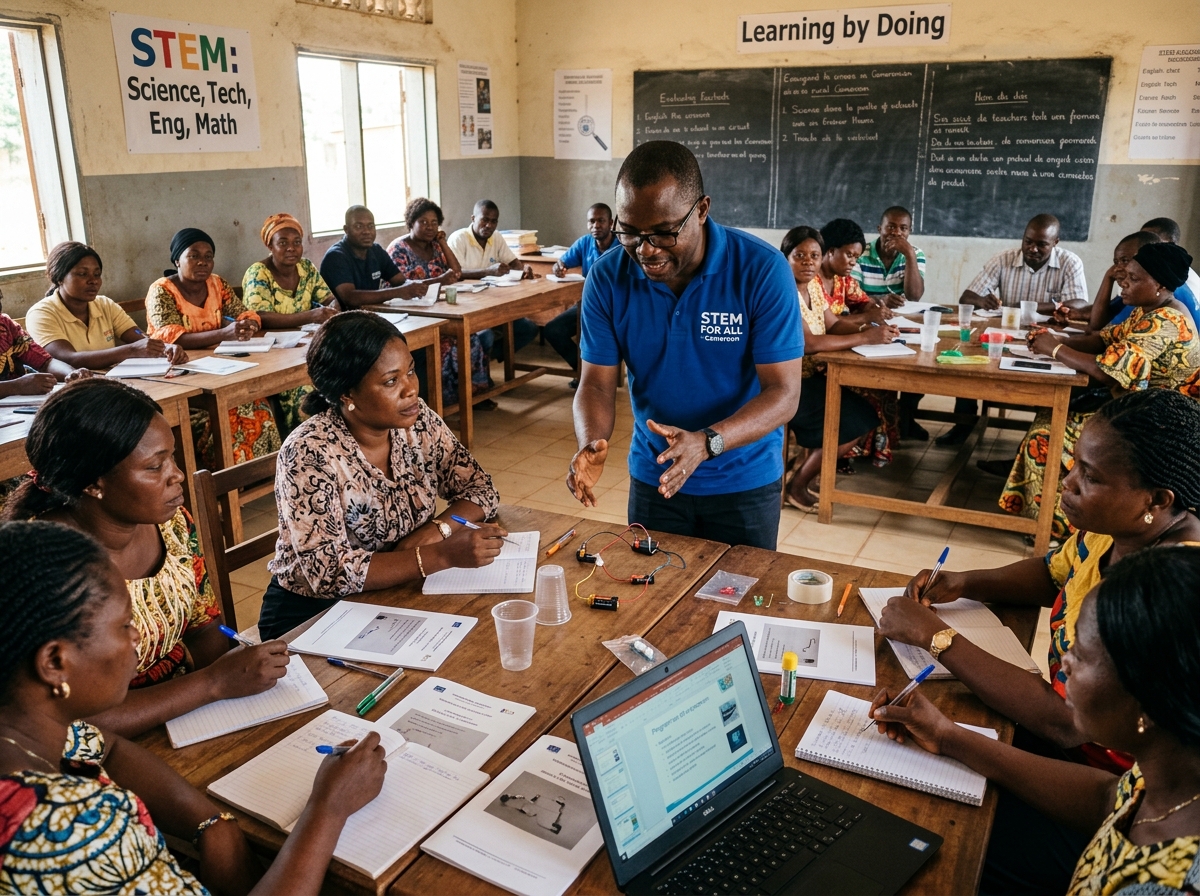
Program Overview
Teacher Capacity Development was created to help address this challenge by investing directly in the people who guide students every day. The program supports teachers through practical training, structured learning sessions, and hands-on exposure to strategies that make STEM more engaging, relevant, and accessible in the classroom and beyond.
Rather than focusing only on theory, the program helps educators develop confidence in using active learning methods, simple practical demonstrations, collaborative activities, problem-solving approaches, and locally adaptable teaching techniques. It is designed to work within real school conditions, including environments with limited resources, by promoting low-cost, realistic, and effective practices.
The program also encourages a mindset of continuous growth, innovation, and reflection among educators. By strengthening teacher confidence and capability, STEMawake helps improve the quality of STEM learning for students and supports a more sustainable impact across schools and communities.
What We Offer
Exposure to learner-centered and activity-based teaching methods
Guidance on using low-cost materials for practical STEM learning
Support in lesson planning and classroom engagement strategies
Approaches for building student curiosity, participation, and confidence
Collaborative learning and peer exchange among educators
Context-adapted tools for schools with limited resources
Ongoing encouragement for innovation in teaching practice
Expected Outcomes
Greater use of learner-centered and activity-based teaching methods
Stronger classroom engagement in STEM subjects
Better use of low-cost and locally relevant teaching materials
Increased teacher motivation and professional growth
More students benefiting from improved STEM instruction over time
Primary and secondary school teachers, especially educators working in schools with limited resources or limited access to practical STEM training
Partner schools and teacher training spaces in Cameroon
Delivered through training cycles, school-term workshops, and periodic professional development sessions
Partner primary schools, secondary schools, and local educator networks
Why It Matters
Teacher Capacity Development helps change that by giving educators the tools and encouragement to create more active, meaningful, and inclusive learning experiences. When teachers feel better equipped, students benefit from stronger classroom engagement, more practical exploration, and a better overall learning environment.
Investing in teachers also creates a multiplier effect. A well-supported teacher can influence many learners over time, making this one of the most sustainable ways to improve educational quality and expand impact.
Core Pillars of Learning
We combine technical rigor with creative freedom to keep students engaged and inspired throughout the program.
Hands-on Coding
From visual blocks to Python, students learn the logic that powers modern software through interactive puzzles.
Robotics Hardware
Students build physical robots, learning about sensors, motors, and the engineering principles of mechanics.
Creative Problem Solving
Weekly challenges encourage students to design unique solutions for real-world scenarios using their new tools.
Who Benefits?
Students
Ages 8-18 who gain technical skills and confidence.
Schools
Local institutions receiving curriculum support and resources.
Teachers
Educators who participate in professional development workshops.
How It Works
Enrollment
Schools or individuals register for a 12-week program cycle.
Guided Learning
Students participate in weekly workshops led by expert mentors.
Capstone Project
Learners present their custom robotic inventions at our Demo Day.
Student Engagement
Graduates
Improved Logic Skills
Partner Schools
Program in Action


Build the Future With Us
Whether you're a corporate partner looking to invest in local talent or an individual donor making a difference, your support keeps our robots moving.